
What Is Accrual Accounting, and How Does It Work?

Accrued expenses appear in the liabilities section of your balance sheet and the expenses portion of your income statement. Depending on your business, you might subdivide your outstanding accrued expenses among various accounts payable — wages payable and taxes payable, for example. If a business uses the accrual method of accounting, revenue is recorded when it’s earned, even if payment occurs later. If a business purchases something but pays later, the purchase is recorded when it’s made.
- Under accrual accounting, businesses report revenue earned but not yet paid as receivables on the balance sheet.
- You only record accrued expenses in your books if you run your business under the accrual basis of accounting.
- It becomes clear that you won’t be able to pay the landlord for the first month of rent until she gets back in touch with you.
- If you use cash accounting, you won’t record accrued expenses because you’ll only record the expenses once the employee is paid in July.
- In other words, the revenue earned and expenses incurred are entered into the company’s journal regardless of when money exchanges hands.
Accrual Accounting
The contractor’s balance sheet would show a receivable for the outstanding invoice. For example, consider a consulting company that provides a $5,000 service to a client on Oct. 30. The client received the bill for services rendered and made a cash payment on Nov. 25. Under the cash basis method, the consultant would record an owed amount of $5,000 by the client on Oct. 30, and enter $5,000 in revenue when it is paid on Nov. 25 and record it as paid. For example, a lawn care business might offer three-month contracts for lawn service, providing weekly mowing to customers and billing monthly. Without using the accrual method, it would be tough to project labor and equipment needs, which occur daily, over a multi-month period.
How Accrual Accounting Works
- If a business purchases something but pays later, the purchase is recorded when it’s made.
- The general concept of accrual accounting is that accounting journal entries are made when a good or service is provided rather than when payment is made or received.
- But with accrual, the expenses show up on your income statement in June as your employee purchases the supplies.
- Adam Hayes, Ph.D., CFA, is a financial writer with 15+ years Wall Street experience as a derivatives trader.
- For example, a lawn care business might offer three-month contracts for lawn service, providing weekly mowing to customers and billing monthly.
She won’t pick up the phone or answer her email, and her answering machine says she’s in Cuba. The accrual method does provide a more accurate picture of the company’s current condition, but its relative complexity makes it more expensive to implement. You now carry $3,000 in accrued expenses on your books to reflect the $3,000 you owe the landlord. Adam Hayes, Ph.D., CFA, is a financial writer with 15+ years Wall Street experience as a derivatives trader.
Accrual Accounting vs. Cash Accounting

It would also be hard to know whether there was enough money in the bank to pay employees when employee paydays and customer billing due dates don’t align. By using accrual accounting, the business can project future https://www.bookstime.com/ cash flows to accommodate these different time frames. Cash accounting—which is the primary alternative to accrual accounting—is a simpler method. With it, financial transactions are recorded when cash is exchanged.
- The company also paid $25,000 in materials and labor expenses in June when it installed the pool.
- He is a CFA charterholder as well as holding FINRA Series 7, 55 & 63 licenses.
- In accounting, an accrual is an amount of money owed to or by a business.
- Accrual accounting is a method used by businesses to record revenue when it’s earned and expenses when they’re incurred—irrespective of when cash transactions take place.
You look over the lease and realize it doesn’t actually specify how the landlord would like to get paid or where to send the money. It becomes clear that you won’t be able to pay the landlord using the accrual method indeed for the first month of rent until she gets back in touch with you. Fast forward to the end of the month (let’s say it’s February), and you still haven’t heard from the landlord about payment.
Best Free Accounting Software for Small Businesses of 2024
This can be a major disadvantage when applying for business loans or attracting equity investors to pursue growth opportunities. Here we’ll go over what exactly accrued expenses are, how to account for them using journal entries, and what they mean for your bookkeeping and accounting operation. This method allows the current and future cash inflows or outflows to be combined to give a more accurate picture of a company’s current and long-term finances. In both cases, your cash account balance will offset the accrual whenever you make or receive the payment in the future.

You’re our first priority.Every time.
- Your accounting method greatly affects your financial reports and how you understand the financial health of your business.
- Your accounting method determines in which month the expenses are recorded.
- Cash accounting—which is the primary alternative to accrual accounting—is a simpler method.
- You find one you like, and their pricing page mentions you can save a lot of money by being billed annually.
- Accrual accounting is usually compared to cash basis of accounting, which records revenue when the goods and services are actually paid for.
- You now carry $3,000 in accrued expenses on your books to reflect the $3,000 you owe the landlord.
- If a business uses the accrual method of accounting, revenue is recorded when it’s earned, even if payment occurs later.
Xero vs QuickBooks for Accounting Features, Fees, Support

We’ll be improving efficiencies in getting bill information into Xero and identifying duplicate versions of the same bill in Xero. You’ll also soon be able to pay bills in foreign currencies from Xero. Last month we made the opt in process even easier so you can now opt in on the billing contact page or on the subscription bill itself. Check out this guide to business grants in Scotland from start up funding to government business grants and more.
Basic inventory tracking in all plans
Other mutual features include receipt photo upload, mobile app mileage tracking, expense reporting and adding billable expenses to client invoices. Ultimately, comparing Xero accounting vs. QuickBooks Online, QuickBooks stands out in terms of their plan options, time tracking, and tax tools. Xero, on the other hand, stands out in terms of their user allowances, integration options, and customer support.
Price and Plans

Xero’s support and learning portal, Xero Central, offers access to a searchable database categorized by topics like ‘Inventory’ or ‘Reporting and Tracking,’ among others. Resources include how-tos, explainers, and professional development courses. Both services will allow you to modify your main dashboard to display the stats that https://www.online-accounting.net/what-are-t-accounts-definition-and-example-3/ matter most to you, but QuickBooks offers a little more flexibility. We’d recommend checking the total features offered by the QuickBooks Essentials and Xero Growing plans against your business’s needs. That said, both QuickBooks and Xero often offer a special entry deal for your first few months, although these deals can vary.

You have a growing startup
QuickBooks and Xero both have good support and training options, but QuickBooks has phone support while Xero does not, earning it a research score of 4.7 – nearly double Xero’s 2.4/5. Similarly, all of Xero’s plans are often 50% off for the first three months. This means that Xero Early may be as cheap as $6.50 per month when 50% off, while QuickBooks Simple Start would cost just $9 a month, provided it is offering the same deal. Meanwhile, a vertical sidebar https://www.online-accounting.net/ can take you to more in-depth dashboards dedicated to topics including Workers, Taxes, and Reports. QuickBooks also offers a number of tailored reports, including QuickBooks reports for nonprofits, which let organizations track their donations and finances with one tool. Still, if your business relies heavily on other software services, Xero is a better bet then QuickBooks for making them all work together and ensuring everything is easily accessible.
- QuickBooks Online provides this feature starting in their Essentials plan, and Xero offers it in their Established plan.
- Instead, eInvoices land in your Xero accounting software electronically and you can approve them in the app or on your laptop.
- If you’re in the market for accounting software, you might be feeling overwhelmed by all the options out there.
- For an additional $50, add a Bookkeeping setup with a Live Bookkeeper.
Xero offers simple inventory tracking software that can track up to 4,000 finished items. With Xero, you can view the number of items you have available and see the total value of stock on hand for any item. Its inventory management reports will show you how well different items are performing and which ones are the most profitable. And you can also easily add inventory Items to quotes, invoices and purchase orders to make billing easy. With a free plan and paid plans starting at $20 per month, Zoho Books has plans for most budgets. Higher-tier plans include unique features, like workflow rules, on top of tools that help you measure project profitability.
QuickBooks has an online portal that users with common problems can check to resolve any issues without involving customer support. It includes articles and videos, grouped by the type of QuickBooks product, and further broken down into categories such as ‘Account Management,’ ‘Taxes,’ and ‘Sales and Customers,’ among others. Video training courses, a blog, and a community forum are also available.
Phone support and live chat support are available 24/5 to all paying customers, but third-party integrations are limited compared to QuickBooks Online and Xero. Has robust reporting tools and report customization options, invoicing for an unlimited amount of clients, inventory tracking in higher tier plans, plus a capable mobile app. Xero and QuickBooks Online are both powerful accounting software solutions for small businesses. However, when you compare features, QuickBooks Online inches ahead for its stronger feature set, ease of sharing with accountants and customer support. This takes into account customer management, revenue recognition, invoice management, and collections.
In our research, we’ve gathered ratings and reviews from TrustRadius (TR) to give you an idea of how these two compare. The vendor offers a guide to manual journals to help you get started. QuickBooks is highly user-friendly, so even if you’re not yet familiar with accounting basics, your learning curve shouldn’t be too steep.
This hot topic was discussed at Xerocon London 2024 where industry leaders shared clever new technology that makes accepting payments a piece of cake. Xero is the first major accounting software to offer tech such as eInvoicing and the upcoming feature of Tap to Pay in the UK and Australia. Read on to learn exactly how Xero’s evolving platform can help you and your clients.
They’ll help you reconcile your bank and credit card statements and prepare monthly reports. Both have great A/P features, but QuickBooks Online is slightly better due to its ability to generate recurring payments. Xero lets you create a recurring how the face value of a bond differs from its price bill but not the payment, which means it doesn’t charge your checking account automatically. Another notable difference is that QuickBooks Online lets you upload your file of transactions, so you aren’t required to connect your bank account.
9 Steps to Creating Nonprofit Budget + Free Template

For nonprofits like yours, financial planning is critical for effective fundraising and development. With nonprofit budgeting or accounting software solutions, you can streamline the financial planning for your nonprofit. A nonprofit budget is a financial roadmap that outlines how an organization plans to use its funds. It details expected income and breaks down operating expenses and overall costs. Capterra’s Nonprofit Grant Budget Template is designed to aid nonprofits in planning and managing their grant funding effectively. This template allows for precise allocation and tracking of grant funds, ensuring that each dollar is accounted for and spent according to grantor guidelines.

Start planning in advance

In addition, many nonprofits engage in accounting tricks or outright dishonesty to keep their reported overhead costs as low as possible—sometimes ridiculously low. This is aided by the fact that the IRS does not require nonprofits to allocate expenses in any particular way. A study of over 220,000 nonprofits found that more than a third reported no fundraising costs at all, while one in eight reported no management or general expenses. The researchers concluded that 75% to 85% of these nonprofits were improperly allocating their expenses. There is no single formula or ratio all nonprofits use to determine how much of their total budget should go to operating expenses. But, the commonly accepted rule most of them follow is the less spent on overhead, the better a nonprofit looks to donors.
Building a nonprofit budget: 4 steps to get started

It publishes detailed annual reports to share its budget allocation and impact with stakeholders. Direct Relief is a great example of how contingency funds can help tackle unforeseen emergencies. It uses its reserve fund to manage unexpected costs during disaster relief efforts. In 2023, it allocated 46% of its program budget ($58.2M) for emergency disaster response. We recommend setting aside at least 5-10% of your annual budget for emergencies.
Capital budgets
- You’ll also find downloadable templates to streamline the process and empower your team to hit the ground running.
- There are two major ways that organizations categorize costs in their budgets.
- Once the budget has been created, it is important to monitor actual expenses and income on a regular basis.
- Additionally, for-profit budgets often have expenses closely linked to revenue, like the cost of goods sold or employee wages.
- It’s important to analyze industry standards when determining the pay rate for specific positions and what benefits to offer.
That’s not the case for most nonprofits, which 5 Main Benefits of Accounting Services for Nonprofit Organizations have separate arms for raising money and carrying out their missions. His growth-hacking abilities have helped Donorbox boost fundraising efforts for thousands of nonprofit organizations. Before starting with what is, essentially, a future-oriented process – clarify the present context. Evaluate current financial health by analyzing the current year-end forecast, current budget variances, and balance sheet strength. Then, take some time to reflect on and learn from programmatic and financial successes and failures. Monitoring your revenue and expenses should ideally become a part of your nonprofit’s organizational culture, something everyone is aware of and contributes to.
It’s not designed to cover large expenses such as capital projects, i.e buying a building. After the organization’s income and expenses have been estimated, the next step is to create a budget that allocates the organization’s resources in a way that supports https://nerdbot.com/2025/06/10/the-key-benefits-of-accounting-services-for-nonprofit-organizations/ its financial goals and objectives. As we look towards 2025, nonprofits face a unique set of challenges and opportunities.
- It indicates which items are subject to specific stipulations—otherwise known as restricted funds—which typically make up the bulk of revenue for nonprofit organizations.
- At the first budget planning meeting, the board or budget committee should agree on their financial goals.
- Without a budget, running a nonprofit is like driving blindfolded – you might struggle to manage funds and meet goals, ultimately impacting your mission.
- You’ve got the budgeting basics down, but how do you ensure your budget is ultimately effective?
- The primary purpose of nonprofit budgeting is to ensure that the organization can meet its goals without running out of money.
Net Operating Cycle Formula and Example

In this case, you must come up with an appropriate strategy for sales to decrease the inventory time. This is because it will help you utilise cash to improve the financial health of your business. If the operating cycle is long, capital remains tied up Accounting for Technology Companies and you will not be able to use them. A negative operating cycle suggests that a business can quickly turn its current assets into cash, resulting in a shorter cycle.
The Financial Modeling Certification
There is no change in days taken in converting inventories to accounts receivable. Remember, your operating cycle is not static; it requires continuous attention and adaptation to changing market conditions. By implementing the strategies outlined in this guide and staying vigilant, you can achieve a more efficient operating cycle, setting your business on the path to financial success. Let’s dive deeper into practical applications and examples to illustrate how the operating cycle formula works. HighRadius seamlessly integrates with leading ERPs like SAP and Oracle, ensuring a smooth and comprehensive O2C process. This integration allows businesses to leverage existing systems and data, significantly enhancing overall efficiency and accuracy.
How can a business improve its operating cycle with the help of this formula?

Thus, a better inventory turnover is a positive for the CCC and a company’s overall efficiency. A operating cycle formula company’s cash conversion cycle broadly moves through three distinct stages and draws the following information from a company’s financial statements. All figures are available as standard items in the statements filed by a publicly listed company as a part of its annual and quarterly reporting. The number of days in the corresponding period is 365 for a year and 90 for a quarter. Divide the price of products sold by the average inventory ratio to find a firm’s turnover ratio.
B2B Payments
- Note that the cycle would start when Joseph starts paying for the raw materials he uses for making food items for his customers.
- He will have to determine the operational cycle of his business to accomplish this.
- The operating cycle of a manufacturing firm is different from non-manufacturing companies because manufacturing companies need to resource raw materials and convert them into finished goods.
- To reduce your DSO, focus on efficient accounts receivable practices, including clear credit policies, prompt invoicing, automated reminders, regular reconciliation, and offering early payment incentives.
Understanding the difference between an operating cycle and a cash cycle is crucial. While both offer valuable insights, a cash cycle reveals a company’s ability to handle cash flow, whereas an operating cycle assesses the overall efficiency of its operations. As can be seen the longer the inventory period and the accounts receivable collection period the longer the operating cycle of the business. Suppose a business has the following information about sales, cost of sales, inventory and accounts receivable. The information can be used to calculate the operating cycle of the business. Therefore, understanding and applying the operating cycle formula is crucial for making informed decisions about a company’s operations and financial management.

CFI is on a mission to enable anyone to be a great financial analyst and have a great career path. In order to help you advance your career, CFI has compiled many resources to assist you along the path.

Raw Materials Conversion Period (RMCP)
- By implementing the strategies outlined in this guide and staying vigilant, you can achieve a more efficient operating cycle, setting your business on the path to financial success.
- You have to use the quotient of credit sales and average accounts receivable to divide 365.
- When the operating cycle is shorter, it indicates frequent sale of products, which lets the businesses learn about the extensive demand for the product in the market.
- Since the received Credit Period will delay the cash outflow from the company, it can be deducted from the Raw Material Conversion Period.
- In this ratio working capital is defined as the level of investment in inventory and receivables less payables.
It’s important to note that the CCC is just one of many financial ratios used to analyze the performance of financial institutions. Other factors such as interest rate risk, credit risk, and capital adequacy are also important considerations for investors and regulators. Remember that this is only an illustrative example and that the ideal CCC will vary based on the sector and other elements. However, a business may get important insights into its working capital management and spot retained earnings areas for improvement by computing the CCC and tracking it over time.
Thus, a shorter operating cycle is generally more favorable as it indicates faster turnover of inventory and receivables. Inventory days refer to the average number of days it takes a company to sell its inventory, which is calculated as the average inventory divided by the cost of sales per day. Accounts payable days refer to the average number of days it takes a company to pay its suppliers, which is calculated as the average accounts payable balance divided by the cost of sales per day. The CCC is then calculated as the sum of inventory days and accounts receivable days minus accounts payable days. The cash conversion cycle (CCC, or operating cycle) is the time between a company’s purchase of inventory and the receipt of cash from accounts receivable.
Reconciliation in Accounting: Meaning, Purposes, Types
The process is particularly valuable for companies that offer credit options to their customers. They can then look for errors in the accounting records for customers and correct these when necessary. This generally takes place at the end of the month as part of the account closing process. This would be immediately before a business puts out its monthly financial statements. You would need to justify, explain, or correct any differences or discrepancies. When there are no unexplained differences, an accountant is able to sign off the process.
Amount paid by the customer is not completely reflecting in the bank
- In general, reconciling bank statements can help you identify any unusual transactions that might be caused by fraud or accounting errors.
- Companies which are part of a group tend to perform intercompany reconciliations at month-end.
- Adding to the challenge, sometimes an entry in the general ledger may correspond to two or more entries in a bank statement, or vice versa.
- Automated reconciliation also flags discrepancies so they can be investigated immediately rather than months later.
When you use accounting software to reconcile accounts, the software does most of the work for you, saving you a good deal of time. However, the process still needs human involvement to capture certain transactions that may have never entered the accounting system, such as cash stolen from a petty cash box. Publicly held companies must keep their accounts consistently reconciled or risk being penalized by independent auditors. Many companies have systems for maintaining payment receipts, account statements, and other data necessary to document and support account reconciliations. Access the internal source of data being reviewed (i.e. the bank ledger account on your accounting software) and compare it against the external document it is being compared against (i.e. bank statement). Confirm that the opening balance on the former agrees to the closing balance on the latter.

Vendor statements
Companies need to reconcile their accounts to prevent balance sheet errors, check for possible fraud, and avoid adverse opinions from auditors. Companies generally perform balance sheet reconciliations each month, after the books are closed for the prior month. This type of account reconciliation involves reviewing all balance sheet accounts to https://www.quickbooks-payroll.org/ make sure that transactions were appropriately booked into the correct general ledger account. It may be necessary to adjust some journal entries if they were booked incorrectly. According to a survey conducted by the Association of Certified Fraud Examiners (ACFE), financial statement fraud constituted 9% of all reported fraud cases in 2022.
Business is Our Business
Accuracy and strict attention to detail are the fundamental principles of this process. Various factors, such as timing differences, missing transactions, and mistakes can cause these discrepancies. Account reconciliation is typically carried out at the end of an accounting period, such as monthly close, to ensure that all transactions have been accurately recorded and the closing statements are correct.

Intercompany reconciliations are undertaken by companies which are part of a wider group. Performing intercompany reconciliations allow for the parent company to produce accurate consolidated accounts. There are 5 main recognised kinds of reconciliation accounting that are industry-wide. These processes demonstrate a company’s focus on accuracy and thoroughness. This process requires you to compare internal records at the beginning and end of a financial cycle. It will let you see if the goods you sold or services you provided match up with your internal records.
For the legal profession, however, regular, effective reconciliation in accounting is key to maintaining both financial accuracy and legal compliance—especially when managing trust accounts. The risks of not reconciling bank statements to general ledger cash accounts are that fraud or errors may not be detected and financial statements used for both internal and external financial reporting may be inaccurate. Cash flow may also be affected if general ledger account balances are inaccurate. Intercompany transactions include adjusting entries for profit elimination relating to general ledger accounts like intercompany revenues, accounts receivable, fixed assets, inventory, accounts payable, and cost of sales.

Accounting software is one of a number of tools that organizations use to carry out this process thus eliminating errors and therefore making accurate decisions based on the financial information. Reconciliation of accounts determines whether transactions are in the correct place or should be shifted into a different account. As CEO and Co-Founder, Mike leads FloQast’s corporate vision, strategy and execution. Prior to founding FloQast, he managed the accounting team at Cornerstone OnDemand, a SaaS company in Los Angeles.
These reconciliations can be performed in several ways, depending on the context. While the entries in the general ledger are based on the facts of the moment, they may not always be accurate. When you receive a check from a customer, you may have recorded it as paid. But there are chances that the check could have bounced due to numerous reasons. Or the payment you made to supplier A went into the accounts of supplier B due to a clerical error.
In order for reconciliation in account to be most effective in preventing errors and fraud, it’s important to conduct the process frequently. And, for some types of accounts, like trust accounts, there may be specific frequency requirements that you must follow to stay compliant with your state bar. How often should you conduct the three-way reconciliation accounting process? As noted earlier, your state may have specific requirements for how often you must conduct three-way reconciliation—such as monthly or quarterly.
Still, the supporting documentation (i.e., a bank statement) says the bank account has a balance of $520,000. Most account reconciliations are performed against the general ledger, considered the master source of financial records for businesses. Reconciliations are usually performed at the end of an accounting period, such as during the month-end close process, lump sum purchase definition to ensure that all transactions are correctly verified and the closing statements are accurate. In single-entry bookkeeping, every transaction is recorded just once (rather than twice, as in double-entry bookkeeping), as either income or an expense. Single-entry bookkeeping is less complicated than double-entry and may be adequate for smaller businesses.
Reconciliation also confirms that accounts in a general ledger are consistent and complete. When you reconcile accounts, you compare two or more sources of a company’s accounting to check for errors and bring them into agreement. When the process has worked well, it will https://www.business-accounting.net/what-is-business-turnover-and-how-do-you-calculate-it/ have picked up on any inaccuracies or instances of fraud. The process is important because it ensures that you can weed out any unusual transactions caused by fraud or accounting errors. But, generally accepted accounting principles (GAAP) demand double-entry accounting.
Inventory reconciliation makes sure that physical inventory counts align with your general ledger. It accounts for transactions related to inventory and accounts payable and reconciles discrepancies. Additionally, it considers factors like the allowance for obsolescence and inventory valuation. Most companies have numerous assets including immovable property, machinery, inventory, cash assets, and more. Over time, these assets can be sold or written off according to their stage in the lifecycle or due to depreciation.
Once the individual client ledgers and the firm’s trust account ledger are aligned, you can then reconcile the client ledgers and trust account ledgers with your trust bank account statement. Once you have access to all the necessary records, you need to reconcile, or compare, the internal trust account’s ledger to individual client ledgers. For law firms, for example, one key type of business reconciliation is three-way reconciliation for trust accounts. There are many types of reconciliation in accounting, with the best method for a situation generally depending on the type of account that you’re looking to reconcile. In the following post, we’ll cover the crucial types of reconciliation for legal professionals and delve into the fundamentals of three-way reconciliation accounting. Plus, we’ll offer useful best practices for reconciliation in accounting for lawyers to help make the process easier, more effective, and more efficient.
Why Accounting Is Important: Business Decisions & Growth

Yes, our team is proficient in U.S. tax regulations and can manage complex tax compliance issues as part of our comprehensive remote accounting services. Our firm seeks to make the financial reporting process as efficient as possible while ensuring our requests to you are minimal. To achieve this, we require all our ongoing clients to provide 3rd party access to their online financial accounts.
Improper 1031 Exchange Reporting
Keeping detailed records of deductible expenses helps reduce taxable income and maximize profits. Implementing best bookkeeping practices is essential for property management success. These practices ensure accurate financial records and compliance with regulations, ultimately supporting business growth.

How cost-effective are Springbord’s outsourced accounting services in the USA?
Necessary expenses are those that are deemed appropriate, such as interest, taxes, advertising, maintenance, utilities and insurance. The accounting profession is evolving with time in response to technical innovation and shifting client expectations. Automation is transforming routine processes, cloud-based platforms are redefining collaboration, and thus, the advisory services are becoming the primary revenue driver. If your firm is experiencing problems with increasing in-house team or margin pressure, white-label accounting services can offer the best relief.
- Accounting is the systematic process of recording, classifying, summarizing, and interpreting financial transactions.
- Our accounting advisors are available to you via scheduled meetings to help you review and interpret your financial statements.
- Companies with regular financial reporting are 2.5× more likely to hit growth targets (AICPA).
- At Springbord, we understand these challenges and offer tailored accounting solutions to meet all your needs, ensuring up to 50% cost savings and 100% accurate, on-time reporting.
- It turns data into decisions, prevents cash-flow disasters, and protects you from penalties.
Which Performance Reports Are Essential for Real Estate Financial Reporting?
We provide tax planning and advisory services to real estate investors and businesses of all types. It’s important to note that the timely delivery of your financials depends on various factors, including the cooperation of property management and other third parties. We rely on receiving the necessary information from these sources by the 10th https://www.austindailyherald.com/sponsored-content/why-real-estate-bookkeeping-is-critical-for-your-business-9247e950 of each month to ensure we can process and prepare your financials on time.

Turn Financial Clarity Into Competitive Advantage
The team knows e-commerce enterprises and has industry understanding of the systems we should employ to make our bookkeeping go smoothly. To guarantee the reliable delivery of high-quality data, Velan works with sophisticated accounting software that follows. Agora’s accounting center gives you full visibility into what your accounting team is working on. From books to tax filings to K-1s, you always know exactly where things stand. We use OCR, AI, and continuous reconciliation to manage your accounting proactively, all year long. We will generally communicate with you once per month to obtain context on certain transactions that can’t otherwise be categorized without your input.
When you hire us, you’re not just getting bookkeeping; you’re getting a comprehensive financial solution tailored to your needs. Real estate bookkeeping is the process of recording, organizing, and managing all the financial transactions that occur within your real estate business. It’s the foundation for understanding your financial position, making informed investment decisions, and maximizing your cash flow. It is a third-party account where funds are held until specific conditions are met.

Q4: What software is best for property management accounting?
Whether you’re a realtor, broker, property manager, or investor — managing your books shouldn’t slow you down. At Accountooze, we offer industry-specific bookkeeping solutions that track every dollar tied to your properties, clients, and commissions. Stay focused on listings and deals while we keep your finances clean, compliant, and investor-ready. As an Aced Accounting client, you’ll have real-time access to your financial reports, including a statement of profit and loss (P&L), balance sheet, and statement of cash flows. Besides, we also provide you with detailed management reports, and how it compares to real estate (KPIs). We go beyond traditional bookkeeping services by providing a team of experts who offer structure, insights, and smoother tax preparation.
- All of our team members are proficient in leveraging software such as Yardi, Workiva, Quicken, Zero, QuickBooks, etc., to ensure accurate and efficient management of your financial data.
- Firms that rely completely on the in-house team face operational strain and margin pressure.
- By choosing BooksTime, you can be confident that your finances are under control.
- These savings come from several areas, including reduced need for in-house accounting staff, less expenditure on training and accounting software, and decreased risks of costly errors.
Accounting services for properties offer comprehensive solutions for managing rental income and expenses, ensuring accurate financial tracking. They streamline real estate ledger management, providing detailed records of transactions. By utilizing rental income bookkeeping and real estate reporting, property owners can achieve real estate bookkeeping clarity in their financial statements. Additionally, asset management accounting helps monitor property value and optimize investment returns. A REIT refers to a company that owns, operates, or finances income-producing real estate.
5 Best Accounting Software for Amazon FBA Sellers 2023

Xero is mobile, so you can do all your accounting tasks on the go. This includes tracking stock movement, making invoicing adjustments, and paying bills. You can also manage your spending with this tool and do bulk bill payments to creditors. Get instant and up-to-date financial reporting to boot, and easily locate all the original transactions with quick links. One interesting feature is the ability to manage personal expense claims with a simple review and approve process for receipts.
Comparison of Best Accounting Software for Amazon Sellers
This tool automatically organizes sales tax data and creates sales tax return-ready reports by state according to each state’s requirements. The AutoFile feature makes filing automatic, so you are always accurate and on time with filings. More than 15,000 businesses and developers to date worldwide use TaxJar.
Choosing the best accounting software for your Amazon business

Xero also integrates with another third-party app to help online retailers track inventory. Yes, however, the data will not be presented in a manageable way right out of the box. This is why it is highly recommended to use a solution like LinkMyBooks which can turbotax customer service categorize all transactions seamlessly and make the bookkeeping process far, far easier. QuickBooks helps you get ready for tax time too since you get to import all your transactions from your bank, sort them into tax categories and take snapshots of receipts.
What is Accounting Software for Amazon Sellers?
Get the best software for your business.Compare product reviews, pricing below. Moreover, the business producing and selling a wide range of products will consider this procedure considerably more difficult. Moreover, tax reports, payments handling, and processes may all be generated using the system, which is used by workers. The users can customize invoices and integrate them into the mail. If you’re looking for a big deduction at year’s end, look for other ways to boost your expenses. Suffice to say, both policies are comprehensive and provide plenty of information about MYOB’s data handling practices.
Freshbooks is known for providing top-notch accounting software for a very reasonable price. Explore the best software tools to help you make money and save time — ranked and reviewed in each category. Set them up as a user in your Seller Central account and give them the appropriate user permissions so they can access your business reports.
Understanding Ebay Seller Fees and How to Manage Them Effectively
Xero can integrate with 800+ business apps to provide customised features and solutions to all kinds of accounting needs. While Wave’s base accounting software is free, add-on services such as credit card payment processing will cost extra. Credit card processing starts at 2.9% plus 30 cents per transaction. Sellers can also accept payments via a variety of methods such as credit and debit cards or even electronic checks. You should maintain two different bank accounts to minimize your legal exposure and manage your tax and business expenses. It’s also worth noting that QuickBooks interfaces with various alternative payroll services, such as Patriot Payroll, OnPay, and Gusto.
The feature allows users to include extra expenditures like listing fees, taxes, storage fees, production costs, and procurement costs. As an online retailer, you’ll need complete accounting software like AccountingSuite to keep track of your business’s finances. QuickBooks Online’s reporting function enables sellers to create thorough information on profit and loss (P&L), inventory expenses, freight, and waste in real-time and with no effort. Grant your partners and team members access to your sellerboard account, assign roles, and organize your team.
- While Xero undeniably has an impressively long list of features, many of them are optional add-ons.
- Businesses that sell or manufacture a variety of options will find this process even more involved than others.
- A2X offers a few more Premium-tier packages that expand the number of seller accounts and marketplaces you can use the tool on.
- Perfect for businesses of any size, ensuring accurate bookkeeping.
- Track the hours that you and your teams have worked on a project and view productivity in the cloud from wherever you are.
I chose to trust the experts on it, and haven’t regretted it once. We have seen several different successful eBay QuickBooks integration methods. It all depends on the tools you prefer and the functionalities you want. FreshBooks has multiple package options so you can pick the one that best suits your business needs and budget.
Businesses that sell or manufacture a variety of options will find this process even more involved than others. To help you find the best accounting solution, we’ve conducted research on a wide range of management software and put together a collection of our best accounting software. Adding data is extremely simple, and once the seller enters the data into Kashoo, they can create custom invoices and integrate the invoices into an email. Customized instructions for payment can be included in each invoice. And, sellers can easily set up a workflow to process and send recurring invoices to simplify payment.

You can sign up for Xero’s 30-day free trial before subscribing to a plan. It’s best to check with your tax professional or your state’s tax website for more information. Sometimes bookkeeping becomes too https://www.personal-accounting.org/ tedious and unwieldy of a task, requiring you to spend too much time on admin and not enough focusing on your business. When setting up with our accountant they were insistent that it was the best option.
TaxJar’s software will connect with your account and provide you with a comprehensive report of all sales tax collected in each county, city and other taxing jurisdiction. They consolidate your monthly statements so you can easily file yo壯陽藥
ur taxes at the end of the year. The bookkeepers work in-house, and they respond within one business day. If you’re interested in taking bookkeeping and accounting off your plate, reach out to us at EcomBalance. EcomBalance is on a mission to help thousands of companies better understand their numbers.
The service is quick and easy to set up with all your apps connected and your account set up within 15 minutes. You see, a single-entry accounting system only logs transactions https://www.intuit-payroll.org/current-assets-vs-non-current-assets/ once. The system doesn’t communicate with any financial institution to give you checks and balances. So, you can’t be sure that you’re balancing your books properly.
QuickBooks Online offers several plans and is available in multiple currencies. FreshBooks provides your clients the cost and project details in an easy to understand quote. Your clients can accept quotes online so that you can get started on the projects faster. Access Xero features for 30 days, then decide which plan best suits your business. Find inventory apps that work for your business in the Xero App Store.
It is used as an accounting tool along with Quickbooks or Xero and is considered an alternative for A2X as a third-party provider. It is exceedingly simple to use and doesn’t require any prior accounting knowledge, unlike Quickbooks or Xero. For eCommerce sellers, estimating the cost of goods sold takes a lot of time and procedure. You must include all expenditures involved in creating or purchasing the things you have sold. A simple connection to the retailer’s bank is all that is required for Denali Business’s Bank Reconciliation feature to keep tabs on and manage transactions. The dashboard in Xero offers the seller a watchlist that can be populated with expenditure accounts and revenue data.
EA vs CPA Tax Professionals: Whats the Difference?

The major difference between accountants and tax preparers are the education and licensure requirements for each. The services and value they offer their clients is shaped by their level and scope of training. CPAs are federally approved to represent you in all matters before the IRS.
CPA vs. Tax Preparer: Which Is the Best Choice for Your Business?
They must also complete 72 hours of continuing professional education (CPE) every three years. One of the most known professionals that help entities prepare and file taxes is a certified public accountant (CPA). However, they’re not the only ones who can file taxes on behalf of businesses and individuals. The IRS also recognizes what it calls Annual Filing Season Program Participants.
- Do you need quick, streamlined tax filing support or broader expertise and planning?
- SmartAsset Advisors, LLC (“SmartAsset”), a wholly owned subsidiary of Financial Insight Technology, is registered with the U.S.
- Every CPA has an 18-month period to pass AICPA’s four-part exam, which covers auditing and attestation, business concepts, accounting and reporting and regulations.
- Not every individual is required to file a tax return, but most people who earn income must file taxes annually.
- CPAs are also usually required to complete 40 hours of continued education annually.
What is an Enrolled Agent?
- There are no guarantees that working with an adviser will yield positive returns.
- If you’re interested in professional help with your taxes, you might be wondering what types of specialists there are and which one you need.
- The above article is intended to provide generalized financial information designed to educate a broad segment of the public; it does not give personalized tax, investment, legal, or other business and professional advice.
- You must usually obtain that experience working under the direct supervision of a licensed CPA.
- Both Enrolled Agents and Certified Public Accountants (CPAs) have unlimited representation rights.
- Some international candidates qualify for the shorter international qualification examination instead of the standard CPA exam.
However, educational, professional, and examination requirements for these career paths vary, sometimes depending on location. When comparing a CPA vs. tax preparer for your business, it’s best to start with your goals. Perhaps your taxes are straight forward, but you have questions about certain tax regulations. Or, perhaps your business is preparing to be audited or needs guidance in structuring investments to improve your tax position.
Professional Requirements
- Some tax clients may prefer a more versatile approach to the tax-filing process rather than a more specific one or vice versa.
- The primary difference between an EA vs CPA is that EAs specialize in taxation, and CPAs can specialize in taxation and more.
- Those with general tax preparer job titles often assist credentialed tax preparers—like CPAs—file taxes on behalf of a business or individuals, too.
- The CPA is the gold standard of accounting credentials, and many taxpayers prefer the sense of security the designation provides.
- Finally, many tax preparers have no special credentials whatsoever.
- Candidates must also pass the challenging four-part Uniform CPA Examination.
- Instead, specific credentials apply to certain professional classes including enrolled agents, certified public accountants (CPAs), and tax attorneys.
Those that specialize in tax preparation can also typically help you with tax and financial planning, accounting needs, and most other financial tasks that you might have. Look to a CPA to identify the credits and deductions you qualify for to increase your https://www.bookstime.com/ tax refund and help lower your tax bill. As with educational requirements, CPA experience requirements vary by state. In general, a person seeking CPA licensure must have at least one year (1,800–2,000 hours) of professional experience in accounting.
CPAs vs. Licensed Tax Preparers
A tax preparer is someone who is licensed to prepare and file taxes, and is generally the right choice for someone who specifically needs help when it comes time to file. Enrolled agent (EA) status is the highest credential awarded by the IRS. These agents must meet all the same requirements as licensed tax professionals, but some former IRS employees can earn an examination waiver and become an EA by virtue of their prior experience. Business owners with simple tax filing needs can rely on a tax preparer. However, for tax planning and more elaborate tax situations, a specialized CPA will be able to offer higher level advice, including financial planning that goes beyond calculating a businesses’ tax liability. Due to their extensive credentials, CPAs do not have limited representation rights and are therefore authorized to represent their clients before the IRS, along with attorneys and enrolled agents.
What Are Representation Rights, and When Do You Need Them?
Licensed tax professionals must pass the three-part Special Enrollment Examination (SEE) and complete 72 CPE hours every three years in order to represent a taxpayer. They’re awarded enrolled agent (EA) status after completing all requirements. Professional accountants are well regarded for their prowess in helping with tax matters, but dedicated tax preparers tax preparer vs cpa also offer their services to taxpayers looking for help in preparing their annual tax returns. Knowing the difference between these two types of tax professionals is useful in deciding which one is right for you. A CPA holds unlimited representation rights as a tax preparer. They can specialize in tax preparation or focus on financial advisory and accounting.

What Are Certified Tax Preparer Exams?
TURBOTAX ONLINE GUARANTEES
Closing Entry Definition, Explanation, and Examples

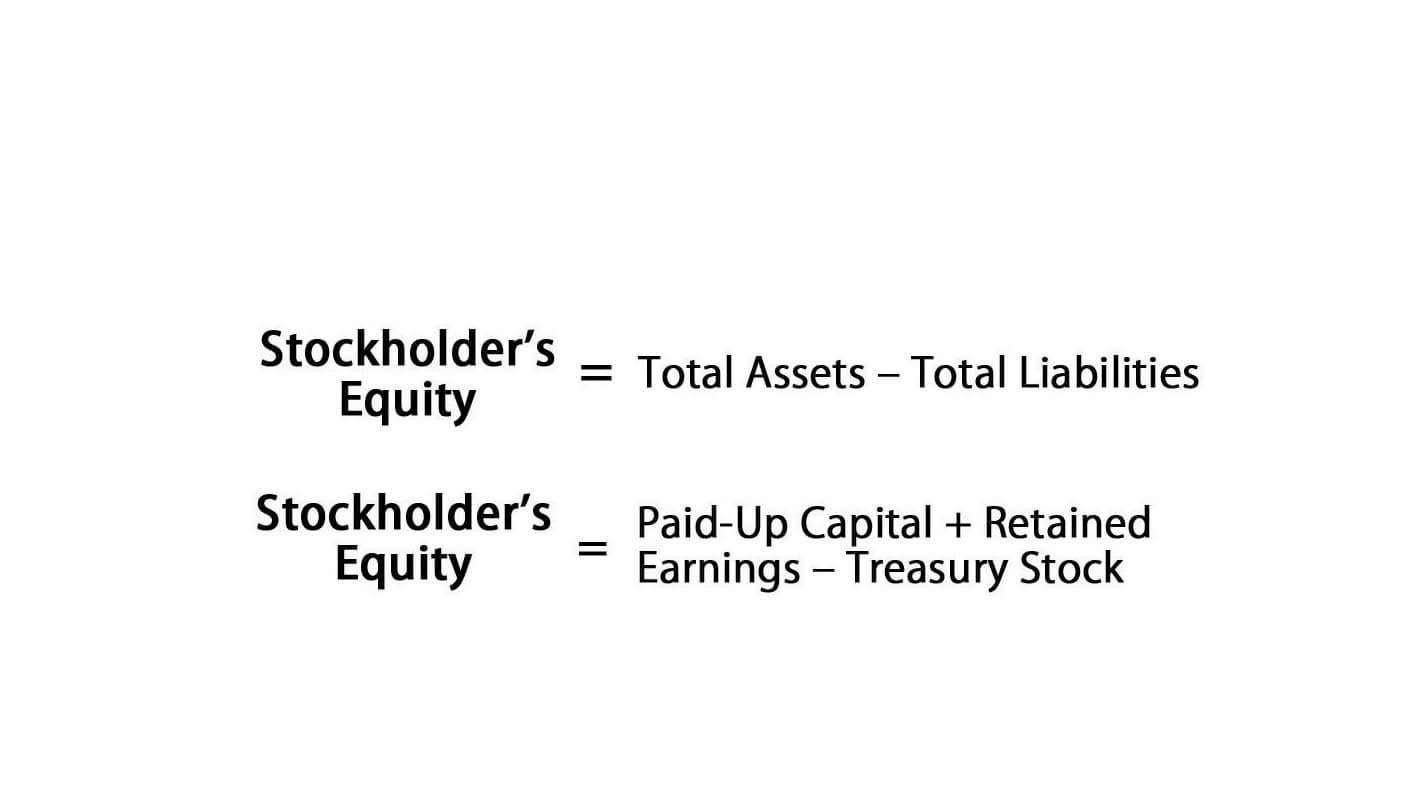
The purpose of the closing entry is to reset the temporary account balances to zero on the general ledger, the record-keeping system for a company’s financial data. Permanent accounts are accounts that show the long-standing financial position of a company. These accounts carry forward their balances throughout multiple accounting periods. However, some corporations use a temporary clearing account for dividends declared (let’s use “Dividends”). They’d record declarations by debiting Dividends Payable and crediting Dividends.
To determine the income (profit or loss) from the month of January, the store needs to close the income statement information from January 2019. After preparing the closing entries above, Service Revenue will now be zero. closing entries accounting The expense accounts and withdrawal account will now also be zero. After this closing entry has been posted, each of these revenue accounts has a zero balance, whereas the Income Summary has a credit balance of $7,400.
What is the closing entry process?
Printing Plus has $100 of supplies expense, $75 of depreciation
expense–equipment, $5,100 of salaries expense, and $300 of utility
expense, each with a debit balance on the adjusted trial balance. The closing entry will credit Supplies Expense, Depreciation
Expense–Equipment, Salaries Expense, and Utility Expense, and debit
Income Summary. You might be asking yourself, “is the Income Summary account
even necessary? ” Could we just close out revenues and expenses
directly into retained earnings and not have this extra temporary
account? We could do this, but by having the Income Summary
account, you get a balance for net income a second time. This gives
you the balance to compare to the income statement, and allows you
to double check that all income statement accounts are closed and
have correct amounts.

The income summary account is an intermediary between revenues and expenses, and the Retained Earnings account. It stores all of the closing information for revenues and expenses, resulting in a “summary” of income or loss for the period. The balance in the Income Summary account equals the net income or loss for the period. This balance is then transferred to the Retained Earnings account. All expense accounts are then closed to the income summary account by crediting the expense accounts and debiting income summary. The end result is equally accurate, with temporary accounts closed to the retained earnings account for presentation in the company’s balance sheet.
Practice Questions: Types of Accounts
Income summary is a holding account used to aggregate all income accounts except for dividend expenses. Income summary is not reported on any financial statements because it is only used during the closing process, and at the end of the closing process the account balance is zero. Closing all temporary accounts to the income summary account leaves an audit trail for accountants to follow. The total of the income summary account after the all temporary accounts have been close should be equal to the net income for the period.
The
third entry closes the Income Summary account to Retained Earnings. The fourth entry closes the Dividends account to Retained Earnings. The information needed to prepare closing entries comes from the
adjusted trial balance. The first entry closes revenue accounts to the Income Summary account.
Example of closing entries
On the statement of retained earnings, we reported the
ending balance of retained earnings to be $15,190. We need to do
the closing entries to make them match and zero out the temporary
accounts. Only income
statement accounts help us summarize income, so only income
statement accounts should go into income summary. Permanent (real) accounts are accounts that
transfer balances to the next period and include balance sheet
accounts, such as assets, liabilities, and stockholders’ equity. These accounts will not be set back to zero at the beginning of the
next period; they will keep their balances.

How to Use Artificial Intelligence in Your Investing in 2024

Further, the use of NLP can aid text mining and analysis of social media data such as tweets, Instagram posts, and Facebook posts, which impact trading decisions. Yet another exciting facet is the use of reinforcement learning-based AI models, which can adjust to dynamically changing market conditions. Thus, AI/ML models enable traders to make more informed decisions, manage risk, and maximize profits. Past studies have developed AI models that are capable of replicating the performance of stock indexes (known as index tracking strategy) and constructing efficient portfolios with no human intervention.
Portfolio Valuation
According to the 2021 research report “Money and Machines,” by Savanta and Oracle, 85% of business leaders want help from artificial intelligence. The true challenge will be for finance chiefs to identify where automation could transform their organizations. Further, they should check whether the opportunities to automate are in areas that consume valuable resources and slow down operations. Finally, CFOs must remember that the success of niche technologies will depend on the capabilities of the people using them. First, using HistCite and considering the sample of 892 studies, we computed, for each year, the number of publications related to the topic “AI in Finance”.
AI for Better Finance: Real-World Use Cases and Examples
Having good credit makes it easier to access favorable financing options, land jobs and rent apartments. So many of life’s necessities hinge on credit history, which makes the approval process https://www.adprun.net/ for loans and cards important. We are looking for an Accountant who will be responsible for accounting of the international group of IT Companies, and participating in reporting processes.
AI Companies Managing Financial Risk
With a Copilot, each Wealth Manager becomes many times more efficient and accurate in their work, multiplying their value to a financial services firm. By leveraging financial models, institutions can make faster and more informed decisions in response to changing market conditions. To extract relevant insights, They can use models to analyze unstructured data sources, such as news articles, social media feeds, and research reports.
The future of your industry starts here.
Intelligent automation has the capacity to transform financial services organizations and enhance customer interactions. The possibilities of automation help the finance teams to make the best use of data. AI assistants, such as chatbots, use AI to generate personalized financial advice and natural language processing to provide instant, self-help customer service. The platform lets investors buy, sell and operate single-family homes through its SaaS and expert services.
IoT Data Analytics: Types, Applications, and Implementation Guide
We can see that our sample exhibits significant geographical heterogeneity, as it covers 74 countries across all continents; however, the most investigated areas are three, that is Europe, the US and China. These results corroborate the fact that the above-mentioned regions are the leaders of the AI-driven financial industry, as suggested by PwC (2017). The United States, in particular, are considered the “early adopters” of AI and are likely to benefit the most from this source of competitive advantage. More lately, emerging countries in Southeast Asia and the Middle East have received growing interest.
Wendy’s is using Alphabet’s Google Cloud to power its Fresh AI platform that it is testing at some of its drive-thrus. Meanwhile, QSRs such as Del Taco, owned by Jack in the Box, Rally’s, Checker’s and CKE have used solutions from companies such as Presto Automation, Hi Auto tech, OpenCity, and Valyant AI. The voice-ordering technology will be shut off at all locations by July 26 of this year.
By analyzing intricate patterns in transaction data sets, AI solutions allow financial organizations to improve risk management, which includes security, fraud, anti-money laundering (AML), know your customer (KYC) and compliance initiatives. AI is also changing the way financial organizations engage with customers, predicting their behavior and understanding their purchase preferences. This enables more personalized interactions, faster and more accurate customer support, credit scoring refinements and innovative products and services. For this purpose, sentiment analysis extracts investor sentiment from social media platforms (e.g. StockTwits, Yahoo-finance, eastmoney.com) through natural language processing and data mining techniques, and classifies it into negative or positive (Yin et al. 2020). The resulting sentiment is regarded either as a risk factor in asset pricing models, an input to forecast asset price direction, or an intraday stock index return (Houlihan and Creamer 2021; Renault 2017).

The most important key figures provide you with a compact summary of the topic of “Artificial intelligence (AI) in finance” and take you straight to the corresponding statistics. The value of AI is that it augments human capabilities and frees your employees up for more strategic tasks. Oracle’s AI is directly interactive with user behavior, for example, showing a list of the most likely values that an end-user would pick. After scrutinising some relevant features of the papers, we make a step forward and outline a taxonomy of AI applications used in Finance and tackled by previous literature. The main uses of AI in Finance and the papers that address each of them are summarised in Table 7.
- “This is the goofiest and likely most dangerous concentration of overvaluation I’ve seen in 34 years investing and throughout financial history,” Bloomstran said.
- All of these manual activities tend to make the finance function costly, time-consuming, and slow to adapt.
- A Vectra case study provides an overview of its work to help a prominent healthcare group prevent security attacks.
- A valuable research area that should be further explored concerns the incorporation of text-based input data, such as tweets, blogs, and comments, for option price prediction (Jang and Lee 2019).
TQ Tezos aims to ensure that organizations have the tools they need to bring ideas to life across industries like fintech, healthcare and more. The following companies are just a few examples of how AI-infused technology is helping financial institutions make better trades. Chris Bloomstran, the president and chief investor of Semper Augustus, rang the alarm on tech valuations in an X post on Wednesday.

Artificial intelligence (AI) refers to the use of machines to simulate human intelligence. AI is accomplished by computers and software, and uses data analysis and rules-based algorithms. It can entail very sophisticated applications and encompass a very wide range of applications. Artificial intelligence in investing and finance takes many forms, but the tremendous amount of data available on financial markets and financial market prices provides many opportunities to apply AI to investing and trading. The ability to trade markets in near-instantaneous time, and strong computing power, has resulted in brokerage companies providing customers with very sophisticated order entry tools that allow computers to monitor trade entry and exit. The diligent use of AI for trading and trade management, if used properly, can greatly reduce the emotional aspect of trading.
As we have illustrated, AI in investing encompasses a lot of tools that can be used by professional and individual investors and traders. If you want to incorporate the use of AI into your investing or trading, you may consider taking the steps that follow. AI can help companies https://www.accountingcoaching.online/the-causes-of-depreciation-accountingtools/ drive accountability transparency and meet their governance and regulatory obligations. For example, financial institutions want to be able to weed out implicit bias and uncertainty in applying the power of AI to fight money laundering and other financial crimes.
Enova has a lending platform powered by AI and ML, and the technologies help with advanced financial analytics and credit assessment. The company has provided over 8 million customers with over $49 billion in loans and financing with market-leading products guiding them to improve their financial health. They have also been helping small businesses and non-prime customers to help solve real-life problems, which include emergency costs and bank loans. Thus, banks must use personalized banking to gain a competitive advantage, improving customer engagement and loyalty.
Future work should study whether these abstract features can be inferred from the model and used as valid input data to simplify the deep network structure (Galeshchuk and Mukherjee 2017). Moreover, the performance of foreign exchange trading models should be assessed in financial distressed times. Further in accounting what is the meaning of cr research may also compare the predictive performance of advanced times series models, such as genetic algorithms and hybrid NNs, for forex trading purposes (Amelot et al. 2021). The second sub-stream focuses on mortgage and loan default prediction (Feldman and Gross 2005; Episcopos, Pericli, and Hu, 1998).
By automating repetitive, manual tasks such as document digitization, data entry, and identity verification, financial institutions can expand their offerings to maintain a competitive edge. Financial Institutions have much to gain from implementing AI to improve revenues and reduce costs. Accenture estimates that Financial Services companies will add over $1 Trillion in value to global banks by 2035.